Heavily Played — Significant Wear, Budget Value
Heavily Played cards show major wear including creases, heavy edge damage, and surface defects. Here's what to know about HP condition and its limited role in collecting.
What Qualifies as Heavily Played (HP)
Heavily Played (HP) Pokémon cards exhibit significant wear that's impossible to miss at first glance. Key characteristics include: heavy corner wear with substantial whitening or rounding on all four corners, pronounced edge wear with visible whitening, nicks, or small tears along multiple edges, surface scratches and scuff marks clearly visible under standard room lighting (not just angled lighting), at least one crease or bend that may or may not break through the card stock, noticeable warping or bowing from moisture or heat exposure, writing or marks on the card (player initials, numbers, small stains), and minor water damage such as slight rippling or staining. HP cards should not have major tears, large missing sections, holes, heavy water damage causing the card to fall apart, or any alteration that makes the card unplayable — those fall into the Damaged category. HP cards are the lowest condition most collectors and players will accept, and they're typically purchased only for bulk deck building, character collecting on the tightest budgets, or as placeholders while awaiting a better-condition replacement.
Market Value and Demand for HP Cards
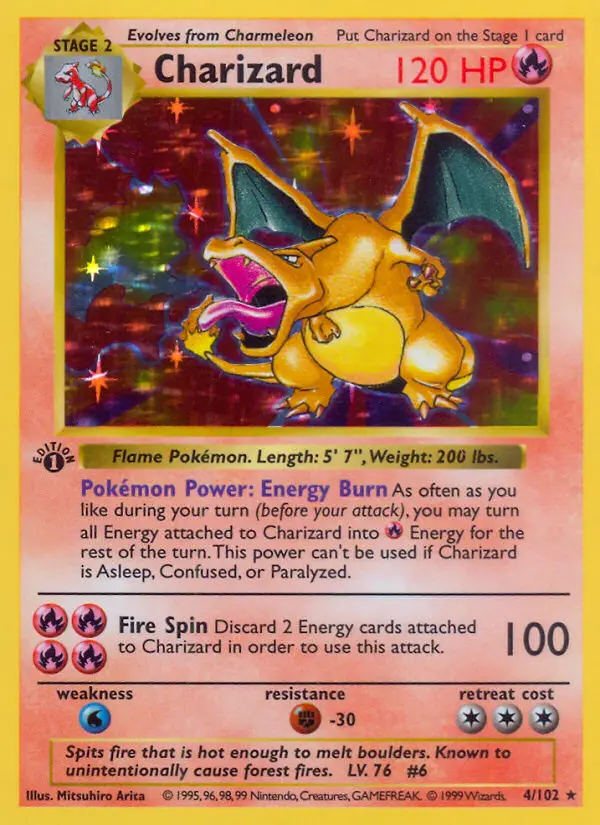
Heavily Played cards typically sell for 10–25% of Near Mint market value, and many cards in HP condition have essentially no market demand at all. A $50 NM card might fetch $5–12 in HP, while a $5 NM card in HP condition may not sell at all because the shipping cost exceeds the card's value. The notable exception is iconic character cards — HP copies of Charizard, Pikachu, and Mewtwo still have some demand from budget collectors who prioritize owning the card over its condition. Even so, the discount is steep: an HP Base Set Charizard sells for perhaps 10–15% of its NM value. When buying HP cards, expect deep discounts and don't pay more than 25% of NM value regardless of the card. When selling HP cards, be prepared for slow sales and lowball offers — the market is thin, and many buyers filter out HP listings entirely. Bulk HP lots (100+ mixed cards) are a viable way to sell HP cards that won't move individually, often fetching $0.05–$0.15 per card depending on the mix of rarities included.
When HP Cards Are Worth Buying
There are a few narrow scenarios where buying HP cards makes sense. Competitive players on the tightest budgets can use HP cards in casual deck builds where appearance doesn't matter — the card functions identically regardless of condition. Character collectors who want to own every version of their favorite Pokémon regardless of condition may buy HP copies of rare variants they can't afford in better shape. Parents buying cards for young children often prefer HP condition because the low cost means less anxiety about further damage. HP cards can also serve as ultra-budget placeholders in a set collection — filling a slot for $2 now while you track down a NM copy at a reasonable price. In all cases, set a strict maximum price as a percentage of NM value (25% at most, 15% for common cards) and don't overpay just because you want to complete a set. Finally, some HP vintage cards with interesting provenance (tournament-played cards with stories) have niche collector appeal as historical artifacts, but this is an uncommon exception rather than a rule.
Common questions
01 Can I use HP cards in Pokémon tournaments?
It depends on the judge's discretion. HP cards with visible creases, warping, or marks on the back may be deemed identifiable and denied. Cards with writing, stickers, or damage that makes them stand out in a sleeved deck are almost always prohibited. For local casual events, judges are more lenient.
02 Should I get HP cards graded?
Almost never. Grading costs $15–$30, and an HP card will receive a PSA 1–4 grade that adds negligible resale value above the raw card's worth. The only exception is an extremely rare vintage card (1st Edition Base Set holo for example) where even a PSA 3 carries historical significance and some market value.
03 How do I sell HP cards?
For individual valuable cards (iconic characters worth over $5 in NM), list them individually with detailed condition descriptions. For everything else, batch them into bulk lots of 50–200 cards and sell on marketplace platforms. Character-specific lots (all Pikachu cards, all Charizard cards) sell better than random mixed lots.
04 What's the difference between HP and Damaged?
HP cards have significant wear but remain structurally intact and identifiable. Damaged cards have major structural issues: deep creases that break the surface, tears, large sections of missing card stock, heavy water damage causing the card to feel spongy or delaminate, burns, or holes. If the card is falling apart or unreadable, it's Damaged, not HP.
Related Condition Guides

Check Your Card's Condition
Get Pokex free. Identify any Pokémon card and see what it is worth in seconds.
No credit card. No signup. Just scan.
Scan to download
Point your phone camera at a code

