Lightly Played — Visible Wear, Lasting Value
Lightly Played cards show minor wear from handling or play but remain fully functional and collectible. Here's how to identify, evaluate, and value LP Pokémon cards.
What Qualifies as Lightly Played (LP)
A Lightly Played (LP) Pokémon card shows visible signs of wear under normal inspection but remains structurally intact with no major damage. The defining characteristics are: slight corner wear (small whitening or rounding on one to four corners that's visible without magnification), minor edge wear (light whitening along one or more edges), very slight surface scratches visible under angled lighting, and minor holofoil scuffing or print lines. LP cards may have been played in a deck for a season or stored without perfect sleeve protection. Creases, bends, water damage, and any writing or ink marks disqualify a card from LP — those push the condition to Moderately Played (MP) or lower. On the PSA grading scale, LP roughly corresponds to a PSA 7 (Near Mint 7) to PSA 6 (Excellent-Mint 6). The card should still look attractive at arm's length — the wear becomes noticeable when you examine it closely. LP is a practical condition for cards you plan to play in decks, display in binders where perfect condition isn't critical, or collect on a budget when Mint and NM prices are prohibitive.
LP Card Value and Market Pricing
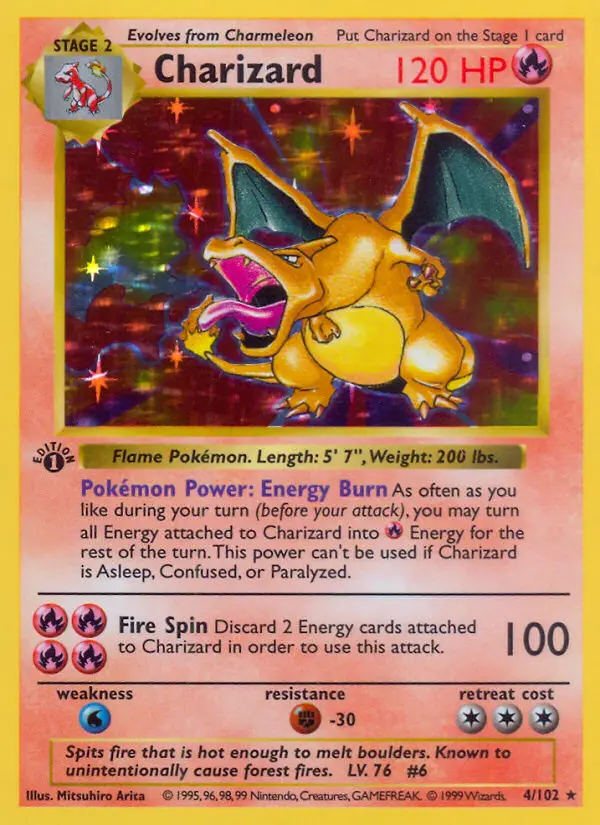
Lightly Played cards typically sell for 50–70% of Near Mint market price, though the exact discount depends on the card's rarity and the severity of the wear. For a $5 NM card, the LP price might be $3–4, making the condition difference relatively minor. For a $100 NM card, LP condition drops the price to roughly $50–70, representing significant savings for collectors who prioritize having the card over having it in perfect condition. Some cards are particularly sensitive to condition: Charizard holographics, for example, have a much larger NM-to-LP price gap than less iconic Pokémon because collector demand for perfect Charizards far exceeds demand for played ones. When pricing LP cards for sale, use Pokex or TCGplayer's completed listings filtered to LP condition to see what buyers are actually paying. Don't assume a linear discount — for some popular cards, LP examples are scarce and may sell at only a 20% discount, while for common Ultra Rares, LP versions can be 60% cheaper than NM.
When LP Cards Are the Right Choice
Lightly Played cards are ideal in several collecting and playing scenarios. If you're building a competitive deck for tournament play, LP cards are functionally identical to NM — the slight wear doesn't affect gameplay, and you'll save 30–50% on your deck cost compared to buying all NM cards. If you're collecting a complete set on a budget, buying LP versions of expensive chase cards lets you fill the set at a fraction of the cost while you save up for NM or graded replacements later. LP is also the right choice for cards you plan to actually play with — shuffling, drawing, and trading during games will inevitably add wear, so starting with an LP card is less painful than damaging a NM card through play. For display purposes, LP cards look perfectly fine in standard binder pages at normal viewing distance; the difference between LP and NM only becomes apparent on close inspection. The one scenario where LP is not recommended is long-term investment — LP cards appreciate more slowly and sell for a lower multiplier than NM and graded cards, so they're better treated as collectibles to enjoy than as assets to hold.
Common questions
01 Can LP cards be used in Pokémon tournaments?
Yes, LP cards are generally legal for tournament play. The Pokémon Company's policy allows cards with minor wear as long as they're not marked, creased, or damaged in a way that makes them identifiable from the back. If in doubt, a judge can evaluate the card before the tournament.
02 How do I prevent a NM card from becoming LP?
Sleeve every card immediately after pulling it. Use double sleeves for valuable cards. Never shuffle unsleeved cards. Handle cards by the edges only, avoid placing them on rough surfaces, and store them in binders or top loaders rather than loose stacks. Keep storage in a climate-controlled environment away from direct sunlight.
03 Is it worth grading a LP card?
Generally no. Grading costs $15–$30 per card, and a LP card will likely receive a PSA 6 or 7, which adds minimal value compared to the grading cost. The exception is extremely rare vintage cards where even a PSA 6 carries significant market value.
04 What's the difference between LP and MP condition?
Lightly Played shows minor wear on corners and edges with a clean surface; Moderately Played shows more noticeable wear including visible scratches, more pronounced edge whitening, and potentially slight bends or creases. The line between LP and MP is the transition from 'slightly noticeable' to 'obvious' wear — if the damage is the first thing you see when looking at the card, it's MP, not LP.
Related Condition Guides

Check Your Card's Condition
Get Pokex free. Identify any Pokémon card and see what it is worth in seconds.
No credit card. No signup. Just scan.
Scan to download
Point your phone camera at a code

