Understanding Pokémon Card Price Trends
Pokémon card prices rise, fall, and sometimes spike dramatically. Here's how to read the market, understand what drives prices, and make smarter buying and selling decisions.
What Drives Pokémon Card Prices
Pokémon card prices are influenced by five primary factors: scarcity, character popularity, competitive playability, cultural moments, and market speculation. Scarcity is the most straightforward — cards from out-of-print sets naturally appreciate as demand grows while supply stays fixed or shrinks (cards are lost, damaged, or locked in long-term collections). Character popularity creates demand asymmetries: Charizard, Umbreon, Mewtwo, and Pikachu cards command 5–50x the price of comparably rare cards featuring less popular Pokémon. Competitive playability drives short-term price spikes — when a card becomes essential in the tournament meta, its price surges until the deck archetype rotates out of Standard format, at which point the price typically drops back to collecting-based demand. Cultural moments (a viral TikTok video, a major tournament win, a celebrity mention, or the anniversary of the Pokémon franchise) can cause sudden demand spikes that double or triple a card's price in days. Market speculation — collectors and investors buying in anticipation of future price increases — creates feedback loops where rising prices attract more buyers, which drives prices higher until profit-taking causes a correction. Understanding these drivers helps you anticipate price movements rather than simply reacting to them.
Historical Price Trends and Cycles
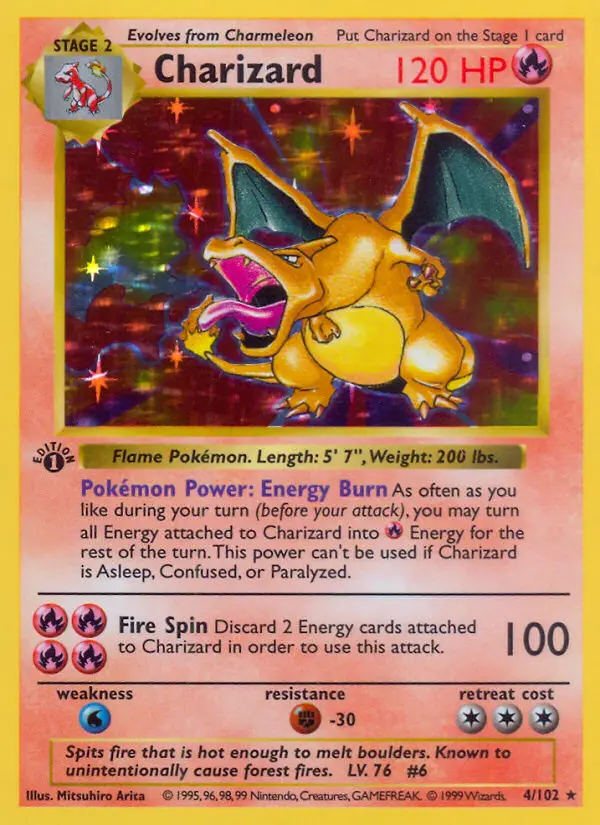
The Pokémon card market has experienced three major price cycles since 2020. The COVID boom (2020–2021) saw unprecedented demand as locked-down consumers rediscovered childhood collections, driving Base Set Charizard from $30,000 in PSA 10 to over $350,000 and modern chase cards to 3–5x their pre-pandemic values. The post-COVID correction (2022–2023) brought prices back down 40–70% across most categories as supply flowed back into the market and speculative buying slowed. The current stabilization (2023–present) has seen vintage cards find a sustainable price floor and modern chase cards settle at 60–80% of their peak values — still well above pre-2020 levels. Seasonal patterns also affect prices: demand typically rises in Q4 (holiday gift buying) and Q1 (tax refund spending), and softens in Q2–Q3. New set releases temporarily depress market prices for current-format cards as supply increases, then prices recover as the set moves toward out-of-print status. Collectors who understand these cycles can time purchases to buy during soft periods (Q2–Q3, post-release) and sell during demand peaks (Q4, after a set goes out of print).
How to Read Market Signals
Effective market analysis requires tracking multiple data points. Sold listings on eBay (not asking prices — sold is what someone actually paid) provide the most current transaction data. TCGplayer Market Price is the industry standard for Near Mint singles pricing, and it updates daily based on recent transactions. Pokex aggregates pricing data across sources and provides historical trend graphs showing price movements over time. Watch for these key signals: a card whose price has been declining for 3+ months may be approaching a buying opportunity, especially if the card is from an out-of-print set with perennial demand. A sudden 20%+ price jump in a week typically indicates a cultural moment or tournament result driving demand — if you already own the card, this may be a selling opportunity. A gradual 50–100% increase over 6+ months for an out-of-print card indicates organic collecting demand and sustainable appreciation. Auction prices are more reliable indicators than buy-it-now prices because they reflect genuine buyer demand without the artificial floor of unsold listings. Pay attention to population reports from PSA and CGC — cards with low populations (few graded examples) may be undervalued relative to their scarcity, especially if grading volume is increasing (suggesting growing collector interest).
Common questions
01 Are Pokémon card prices going up or down?
Vintage WotC-era cards (PSA-graded) have stabilized at prices 30–50% below their 2021 peak but well above pre-2020 levels. Modern chase cards are similarly stabilized. The market is currently in a healthy normalization phase after the COVID boom and correction. Newly released set prices follow a predictable pattern: high at release, declining over 3–6 months, then rising as the set goes out of print.
02 When is the best time to buy Pokémon cards?
The best time to buy singles is 3–6 months after a set releases, when supply from opened product has pushed prices down before the set goes out of print. The best time to buy sealed product is during Q2–Q3 when demand is seasonally lower. For vintage cards, buy during market corrections (like the current stabilization period) rather than during hype-driven peaks.
03 Which Pokémon cards hold their value best?
1st Edition WotC-era holographics (PSA-graded) have the strongest value retention over time. Among modern cards, alt arts and illustration rares from popular sets (Evolving Skies, Crown Zenith) hold value better than standard Ultra Rares. Character cards (Charizard, Umbreon, Pikachu) consistently outperform less-popular Pokémon cards of similar rarity.
04 Should I sell my Pokémon cards now?
It depends on your goals. If you're holding modern chase cards that have appreciated significantly, selling during a price peak (Q4, post-tournament win) and rebuying during a soft period can maximize returns. If you're holding vintage WotC-era cards, they're likely to appreciate further over 5+ year horizons, making them better candidates for holding than selling.
Related Comparisons


Compare Card Prices Instantly
Get Pokex free. Identify any Pokémon card and see what it is worth in seconds.
No credit card. No signup. Just scan.