
A Brand New World
Ruby & Sapphire launched the EX era with Generation III Pokemon, new card mechanics, and the debut of powerful Pokemon-ex cards that changed competitive play forever.
 ex1
ex1 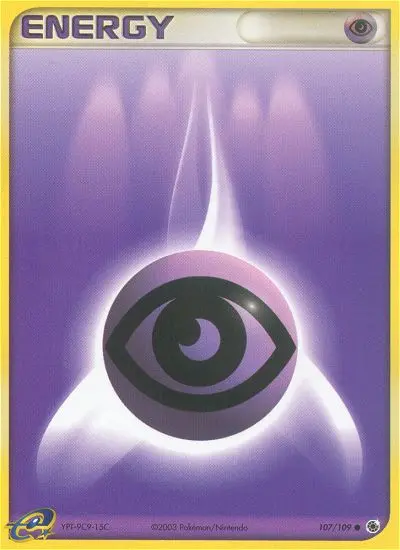
Difficulty
3/5 to complete
Avg Card Value
Varies
Market average
Top Card
Blaziken
See market
Rarity Tier
RareOverview
Ruby & Sapphire, released July 18, 2003, marked the beginning of the EX era and Nintendo's takeover from Wizards of the Coast. With 109 cards, it introduced Generation III Pokemon and the Pokemon-ex mechanic — powerful cards that gave up two prizes when knocked out.
Best for
- Collectors building early modern EX sets and learning reverse-holo rows
- collectors pricing Ruby & Sapphire (2003, 109 cards) as EX-era cardboard — not as generic “old cards”
- buyers who already know Blaziken / Gardevoir is the expensive row in Ruby & Sapphire
Skip this path if
- you treat every EX as equal liquidity across expansions
- you expect every card in Ruby & Sapphire to carry similar resale (bulk is bulk)
Common mistakes
The expensive mistake on Ruby & Sapphire is buying “EX era” bulk without sorting by exact expansion code. Set code ex1 (2003) is the membership test — character name alone will not save a bad buy. Budget Blaziken / Gardevoir as priority singles; the other 107 cards are not the same project.
What to check first
Pull up Blaziken / Gardevoir first — number, finish, and surface — then decide if the ask is real. Parallel check: EX vs non-EX, set symbol, and reverse holo status before comps. Only after that does the full Ruby & Sapphire checklist tell you what is left.
Top of the chart
Most valuable cards
Blaziken holo (#3) and Gardevoir holo (#7) are the top regular holos. The set includes early EX-era reverse holos with a unique pattern. Sceptile holo and Swampert holo round out the starter trio. Overall values are moderate compared to WOTC era.
Full Collection
Cards from Ruby & Sapphire
Tap any card to see price history and details.
28 of 109 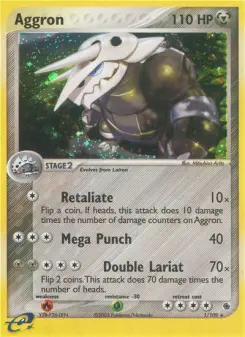
Aggron
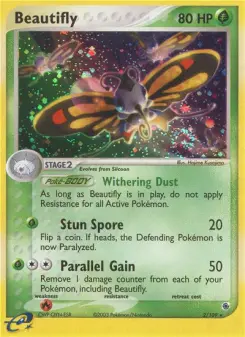
Beautifly
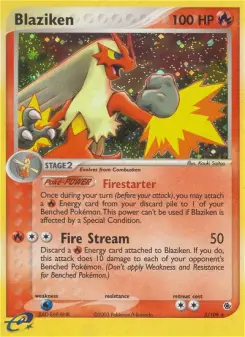
Blaziken
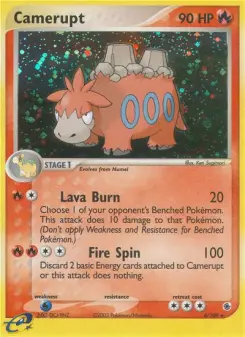
Camerupt
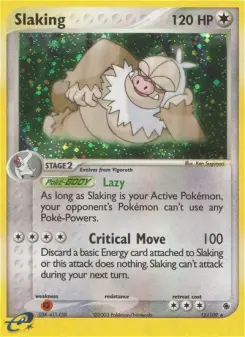
Slaking

Pelipper
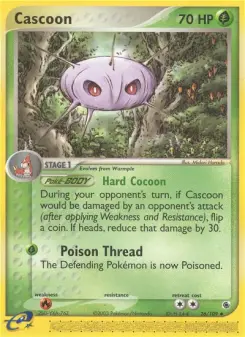
Cascoon
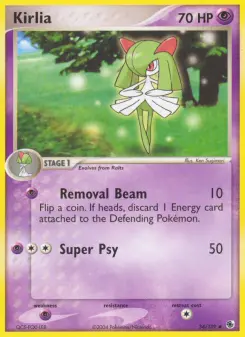
Kirlia

Marshtomp

Wailmer
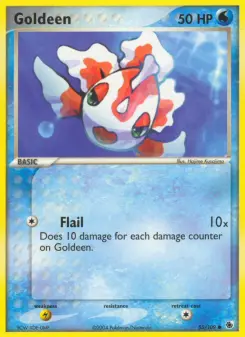
Goldeen
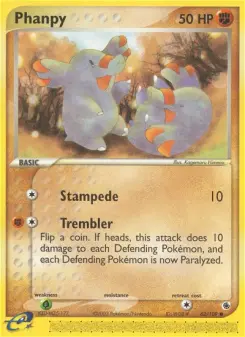
Phanpy
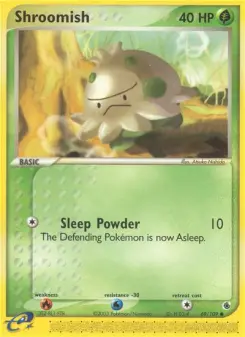
Shroomish

Wingull
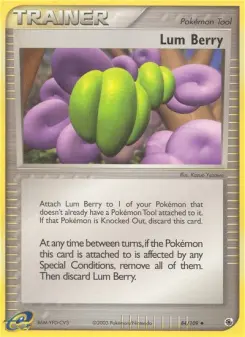
Lum Berry
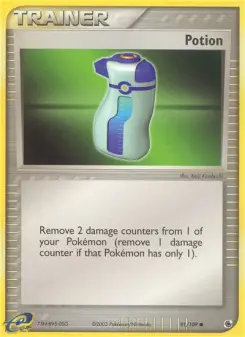
Potion
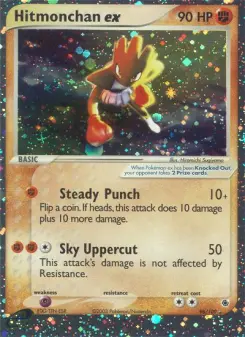
Hitmonchan ex
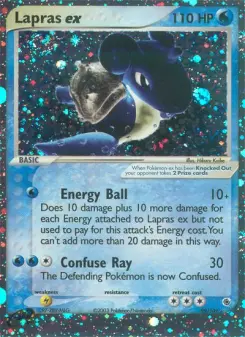
Lapras ex
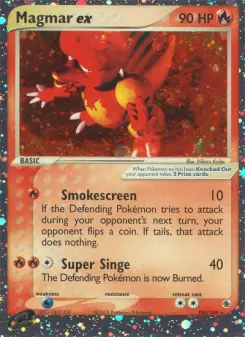
Magmar ex
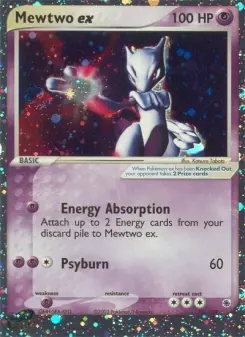
Mewtwo ex
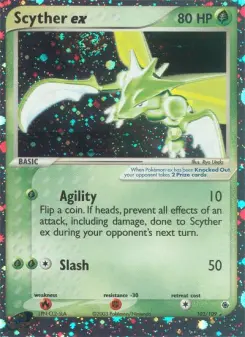
Scyther ex
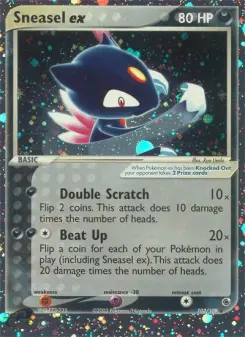
Sneasel ex
Grass Energy
Fighting Energy

Water Energy

Psychic Energy

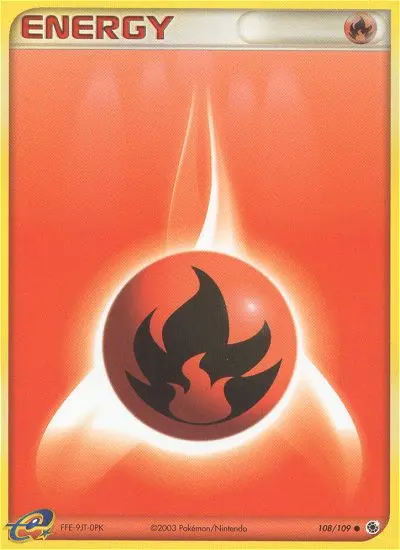
Fire Energy
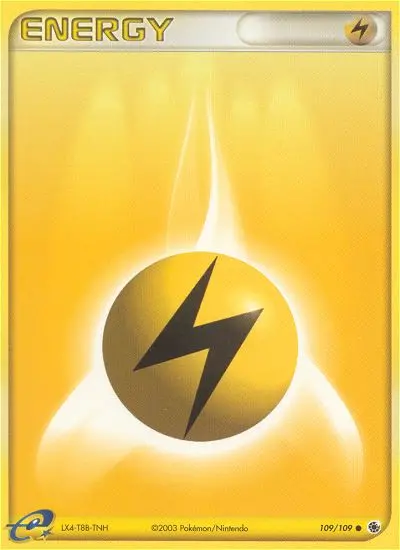
Lightning Energy
Tips to finish the set
Ruby & Sapphire is the most accessible EX-era set to complete, with 109 cards and reasonable prices. The transition from WOTC to Nintendo makes this a historically significant set. Reverse holos add depth for master set builders.
Step by step
How to Complete This Set
- 01
Identify Ruby & Sapphire cards by set code ex1 / symbol — do not sort by art alone
- 02
Split bulk commons/uncommons from holos and special rarities before pricing
- 03
Track Blaziken and Gardevoir as priority singles, not pack EV fantasies
- 04
Scan or checklist-gap the rest after the chase budget is honest
Scan with the app
Pokex identifies the EX-era card layout differences from WOTC cards and recognizes the Ruby & Sapphire set symbol. It helps track completion across both regular and reverse holo variants.
FAQ
Common questions
01 Is Ruby & Sapphire the first Nintendo Pokemon set?
Yes. Ruby & Sapphire was the first Pokemon TCG set published under Nintendo/The Pokemon Company International after the license transferred from Wizards of the Coast.
02 What are Pokemon-ex cards?
Pokemon-ex are powerful cards with higher HP and stronger attacks than regular Pokemon. The trade-off is that your opponent takes two prize cards when a Pokemon-ex is knocked out.
03 What starter Pokemon are in Ruby & Sapphire?
The Hoenn starter lines are all featured: Treecko/Grovyle/Sceptile, Torchic/Combusken/Blaziken, and Mudkip/Marshtomp/Swampert, each with holographic rare final evolutions.
04 How much are Ruby & Sapphire cards worth?
Most Ruby & Sapphire cards are affordable. Holo rares in near mint condition range from $10–$80. The set is one of the more budget-friendly vintage Pokemon expansions to collect.
Related Sets
You might also like





Free to download
Ready to scan your collection?
Get Pokex free. Identify any Pokémon card and see what it is worth in seconds.
No credit card. No signup. Just scan.
Scan to download
Point your phone camera at a code

